Health and Safety Policy — Commercial Waste Chingford
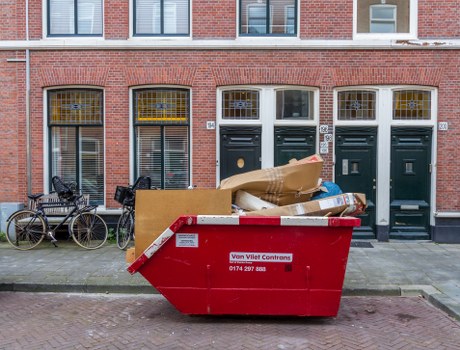
Our company is committed to providing a safe and healthy working environment across all commercial waste and rubbish collection operations. This Health and Safety Policy sets out the principles, responsibilities and procedures that guide our commercial waste services in and around Chingford, ensuring safe removal, transport and handling of commercial rubbish and waste. All employees, contractors and stakeholders are required to follow this policy to protect people, property and the environment.Policy Objectives and Scope
This policy aims to: prevent injury, reduce occupational illness, and ensure legal compliance for our commercial waste operations. It covers waste transfer, bin servicing, bulk rubbish removal, and on-site handling procedures for clients across our service area. The approach balances operational efficiency with strong risk control measures so that business continuity and duty of care are maintained.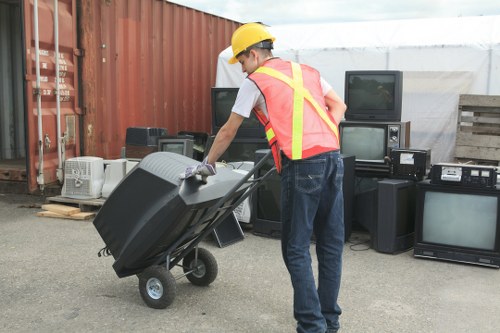
Responsibilities and Accountability
- Management — to establish, maintain and review safety systems, provide resources and ensure staff competence.
- Supervisors — to implement safe working procedures, supervise teams and ensure appropriate PPE is used.
- Employees — to follow procedures, report hazards and take reasonable care for personal and public safety.
Risk Assessment and Control Measures
We conduct systematic risk assessments for every type of job, including routine bin lifts, compacting operations and bulky waste removals. Identified hazards are evaluated and controlled using the hierarchy of controls: eliminate, substitute, engineer, administrate and use personal protective equipment (PPE). Typical controls include segregation of waste streams, mechanical aids for lifting, secure load procedures for transport and traffic management where collections take place near roads.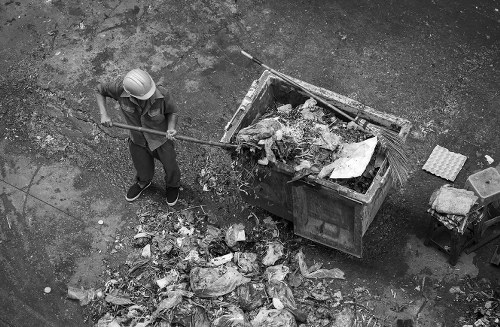
Training, Competence and PPE
All staff receive induction training and ongoing competency checks tailored to their role in waste management services. Training covers manual handling, hazardous waste awareness, vehicle operations and first aid. PPE is mandatory where identified: high-visibility clothing, gloves, safety boots, eye protection and appropriate respiratory protection when handling dusty or odorous loads. Records of training and certifications are maintained and reviewed.Safe Systems of Work
Detailed procedures govern each stage of work: pre-shift checks, route planning, safe stopping, bin handling and secure vehicle loading. We enforce permit-to-work arrangements for non-routine tasks such as confined space access or handling chemical waste. Contractors engaged for specialised disposal must demonstrate equivalent safety standards before work begins.
Incident Reporting and Emergency Response
We operate a clear incident reporting system to capture accidents, near misses and environmental incidents promptly. Investigation procedures identify root causes and corrective actions that prevent recurrence. Emergency response plans include spill containment, first aid arrangements and liaison with emergency services when required. All emergency equipment is inspected regularly.Waste Handling and Environmental Controls
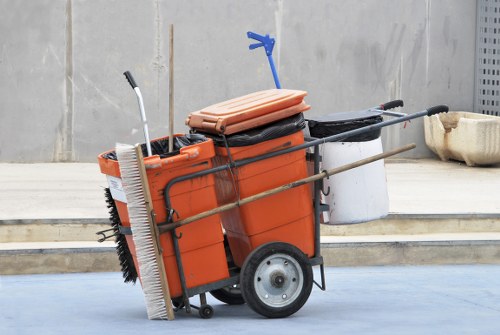
Our waste handling procedures prioritise containment and minimisation of contamination during collection and transfer. Measures include using sealed containers for hazardous materials, routine vehicle washdowns to control spills and a commitment to recycling where practicable. Waste segregation and documentation ensure traceability from collection to disposal, supporting responsible waste management and reducing environmental risk.Monitoring, Audit and Continuous Improvement We monitor performance through regular audits, toolbox talks and safety observations. Key performance indicators include incident rates, training completion, equipment inspections and compliance with safe operating procedures. Findings drive targeted improvements, updated risk assessments and refresher training to maintain high standards in our rubbish collection and commercial waste solutions.
Communication, Consultation and Worker Involvement
Clear communication channels ensure that safety information is shared across teams and with clients where relevant. Consultation with employees and their representatives is integral to policy review and operational changes. Workers are encouraged to propose improvements, report hazards and participate in safety meetings to support a positive safety culture.Equipment, Maintenance and Vehicle Safety
All vehicles and mechanical handling equipment are subject to scheduled maintenance, pre-use checks and defect reporting procedures. Load securement and vehicle stability are prioritised to reduce the risk of road incidents during commercial rubbish transport. Maintenance logs are retained to demonstrate compliance with operational standards.Policy Review and Commitment This policy is reviewed at least annually or whenever significant changes occur to operations, legislation or organisational structure. Management commits to providing the necessary resources to implement and improve this Health and Safety Policy. Together, through diligence, training and shared responsibility, we aim to deliver safe, reliable and responsible waste management services across our service area.
